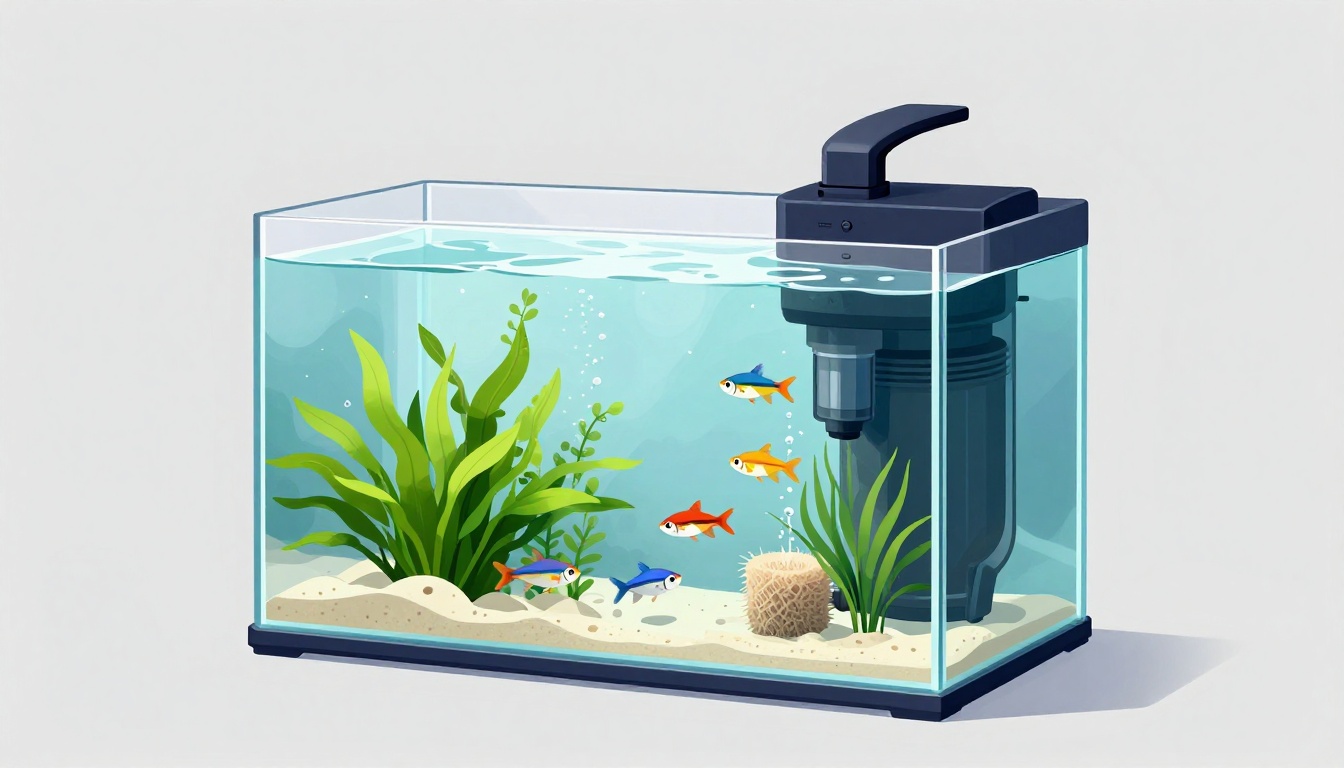
Picture this. You set up your first aquarium full of excitement. Bright tetras dart around, plants sway gently. Then, a week later, the water turns cloudy. Fish gasp at the surface, looking stressed. You panic and grab the first filter you see online. Sound familiar?
That happened to me early on. The right filter changes everything. It keeps water crystal clear and fish thriving. Hang-on-back (HOB) filters hang on the tank’s back edge. They pull water through multi-stage cleaning and return it clean. Sponge filters use an air pump to bubble water through foam. This boosts gentle biological cleaning. Canister filters sit outside the tank. They handle heavy-duty filtration with stacked media trays.
No need to guess anymore. This guide breaks it down simply. You’ll learn each filter’s strengths. Then compare them on flow, cost, and ease. Finally, match one to your setup. Factors like tank size, fish type, and your time matter most. Let’s find the winner for clear water and happy fish.
Understand What Each Filter Does Best
Filters keep aquariums healthy by removing waste, debris, and toxins. Each type shines in different ways. Think of HOB as your kitchen’s all-in-one dishwasher. It scrubs mechanically, biologically, and chemically. Sponge acts like a cozy hotel for good bacteria. Canister works like a pro vacuum for big messes.
Pick based on your fish and tank needs. Beginners often start here because setups match common scenarios.
Hang-On-Back Filters: Easy All-Around Cleaners
HOB filters suck water from the tank bottom. It flows through cartridges for mechanical, biological, and chemical cleaning. Clean water spills back over the top.
Pros include quick setup. You hang it on the rim in minutes. It suits 10- to 75-gallon tanks well. Most models adjust flow to avoid strong currents. You see the priming process, so it’s foolproof.
However, cheap ones hum loudly. They take up back wall space too. Therefore, beginners love them for community tanks with tetras or guppies. Flow stays gentle yet effective. Brands like AquaClear offer reliable options.
In short, HOB balances power and simplicity.
Sponge Filters: Gentle Giants for Baby Fish
An air pump pushes bubbles through a foam sponge. This draws water in for mostly biological filtration. Flow stays low and steady.
Safety stands out. Fry, shrimp, and bettas thrive because currents won’t harm them. Costs run low at $10 to $30. No priming needed; just plug in the airline.
On the other hand, mechanical filtering weakens. It needs time for bacteria to grow. Rinse the sponge weekly in tank water to keep it alive. Place it in a corner for best results.
Ideal for 1- to 20-gallon breeding tanks or planted setups. Silence rules except for soft bubbles.
Canister Filters: Powerhouses for Big Tanks
Water pumps into an external canister. Multi-tray media handles all stages: mechanical, biological, chemical. Quiet operation sends it back via tubing.
Capacity impresses. It tackles 50+ gallon tanks with ease. Customize media stacks for your needs. Hides completely for a clean look.
Yet, prices start at $100. Monthly cleanouts get messy with water spills. Weight makes moving tough. Route tubing neatly behind furniture.
Perfect for high-waste fish like cichlids or goldfish. Reefs benefit too. Fluval leads in quality models.
Compare Filters on What Really Counts for Your Tank
Key factors decide the winner. Flow affects fish comfort. Maintenance fits your schedule. Cost impacts your wallet. Space and noise matter for home setups.
Use this table to scan differences fast. It highlights why each suits certain needs. Match it to your situation for better fish health.
| Factor | HOB Filter | Sponge Filter | Canister Filter |
|---|---|---|---|
| Flow Strength | Medium, adjustable | Low, gentle | High, powerful |
| Setup Time | 5 minutes | 5 minutes | 30 minutes |
| Maintenance | Monthly cartridge swap | Weekly rinse | Every 4-6 weeks, deep clean |
| Cost (Upfront) | $30-$80 | $10-$30 | $100-$300+ |
| Space/Noise | Back wall, possible hum | Inside corner, silent | Hidden, quiet |
This shows trade-offs clearly. Strong flow clears waste fast but stresses delicate fish. Easy maintenance saves time. Therefore, pick what fits your routine.
Filtration Power and Water Flow Needs
Sponge offers the lowest flow. It suits shrimp or fry because currents stay calm. HOB provides medium flow you tweak with a knob. Canister delivers high power for waste-heavy tanks.
Goldfish produce lots of poop, so high flow helps. However, bettas hide from strong streams. Match flow to fish. Too much stresses them; too little clouds water.
Setup Time, Maintenance, and Beginner Fit
HOB wins for speed. Just hang and prime. Sponge plugs in simply. Canister needs tubing connections.
Rinse sponge weekly to avoid clogs. Swap HOB cartridges monthly. Canister demands full disassembly every month or so. Lazy keepers grab HOB. Committed hobbyists choose canister for top results.
Upfront Cost and Hidden Expenses
Sponge stays cheapest overall. HOB cartridges add $10 monthly. Canister media trays cost extra too.
Budget $30 for a solid HOB on small tanks. Scale up wisely. Long-term, sponges save because air pumps last years.
Space, Noise, and Tank Appearance
HOB sits visible but slim models blend in. Sponge tucks inside discreetly. Canister hides under stands.
Cheap HOBs buzz; quality ones quiet down. Sponge bubbles softly. Good canisters whisper. For living rooms, hide canister and pick silent HOB.
Match the Perfect Filter to Your Aquarium Setup
Your tank dictates the choice. Consider size, fish load, and goals. Mix filters if one falls short, like sponge plus HOB.
Ask yourself: What’s my tank size? High waste or delicate swimmers? How much time do you have? These guide you right.
Tiny Tanks Under 20 Gallons
Go sponge first. Low flow protects nano fish like bettas. Bio power builds fast in small volumes.
HOB works if waste builds quick, like with snails. Skip canister; it’s overkill and pricey.
Medium Tanks 20-75 Gallons
HOB excels here. Balances flow and ease for tetras or guppies. Add sponge in breeding corners.
Choose canister only for heavy bioloads, like discus. It handles the load without multiples.
Large Tanks Over 75 Gallons
Canister rules for power. One unit covers big waste from goldfish or cichlids.
Multiple HOBs work but clutter the back. Use sponge as a quiet backup for fry areas.
Right match means thriving fish and less work.
No perfect filter fits every tank. Assess size, fish, and your style first. Start simple with HOB or sponge. Upgrade as you learn.
Share your setup in the comments. What filter do you use? Try online calculators for exact ratings.
Imagine clear water and active fish. You can get there. Pick smart, maintain steady, and enjoy the hobby.